Casey Keller · 24 October 2026
Polish Engineering Programs Blend Craft Rituals with Ethics Training for Tech Students
Polish universities have integrated traditional craft rituals into engineering ethics curricula over the past decade, creating structured modules that combine hands-on practices with decision-making frameworks. Programs at institutions including Warsaw University of Technology and AGH University of Science and Technology in Krakow require students to complete sequences where metalworking techniques or textile patterning exercises precede discussions on professional responsibility and data privacy standards. These approaches draw from documented educational pilots that began in 2021, with expansions scheduled for October 2026 across multiple faculties.
Origins and Program Structure
Researchers at the Polish Ministry of Education and Science tracked the adoption of these blended modules through annual reports that list participation numbers and curriculum adjustments. Data from 2023 shows over 1,200 students enrolled in pilot courses that pair ritualized craft sessions with case studies on algorithmic bias and infrastructure safety. The structure typically allocates 30 percent of contact hours to guided craft activities, such as repetitive forging motions or loom-based pattern replication, followed by group analysis sessions that reference EU directives on digital ethics. External evaluations from the European Association for Quality Assurance in Higher Education note consistent documentation of student completion rates above 85 percent in participating departments.
Observers note that the rituals serve as entry points for introducing concepts like accountability and stakeholder impact without relying solely on lecture formats. In one documented sequence at Wroclaw University of Science and Technology, students perform a standardized sequence of tool preparation before examining real-world scenarios involving autonomous vehicle systems. Records indicate these sessions run for 90 minutes each week during the fall semester, with adjustments planned for October 2026 to incorporate updated metrics from national accreditation bodies.
Methods and Integration Points
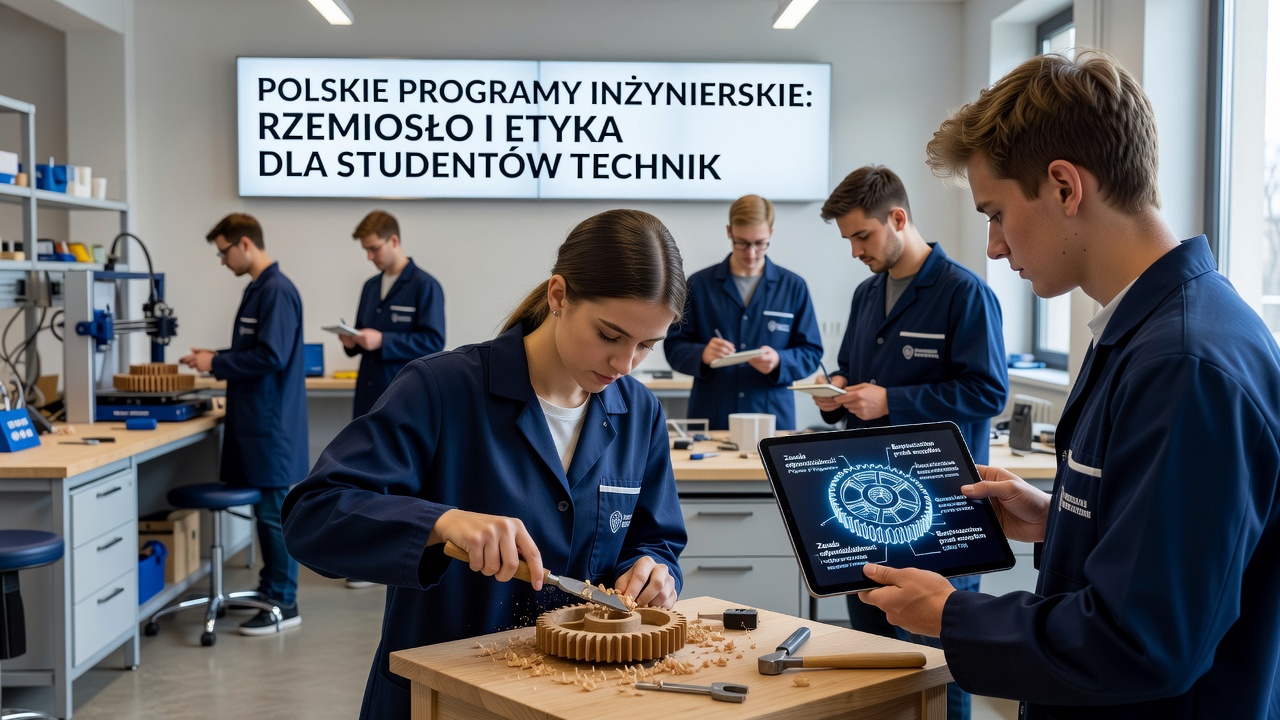
Faculty coordinators describe the craft components as standardized exercises drawn from historical Polish artisan guilds, adapted into timed laboratory blocks. Sessions often begin with tool inspection rituals that mirror safety protocols used in industrial settings, then transition directly into ethics prompts supplied by partner organizations. Studies compiled by the Polish Academy of Sciences record that these transitions occur within the same classroom space, allowing immediate application of physical focus techniques to abstract dilemmas such as intellectual property allocation or environmental compliance reporting.
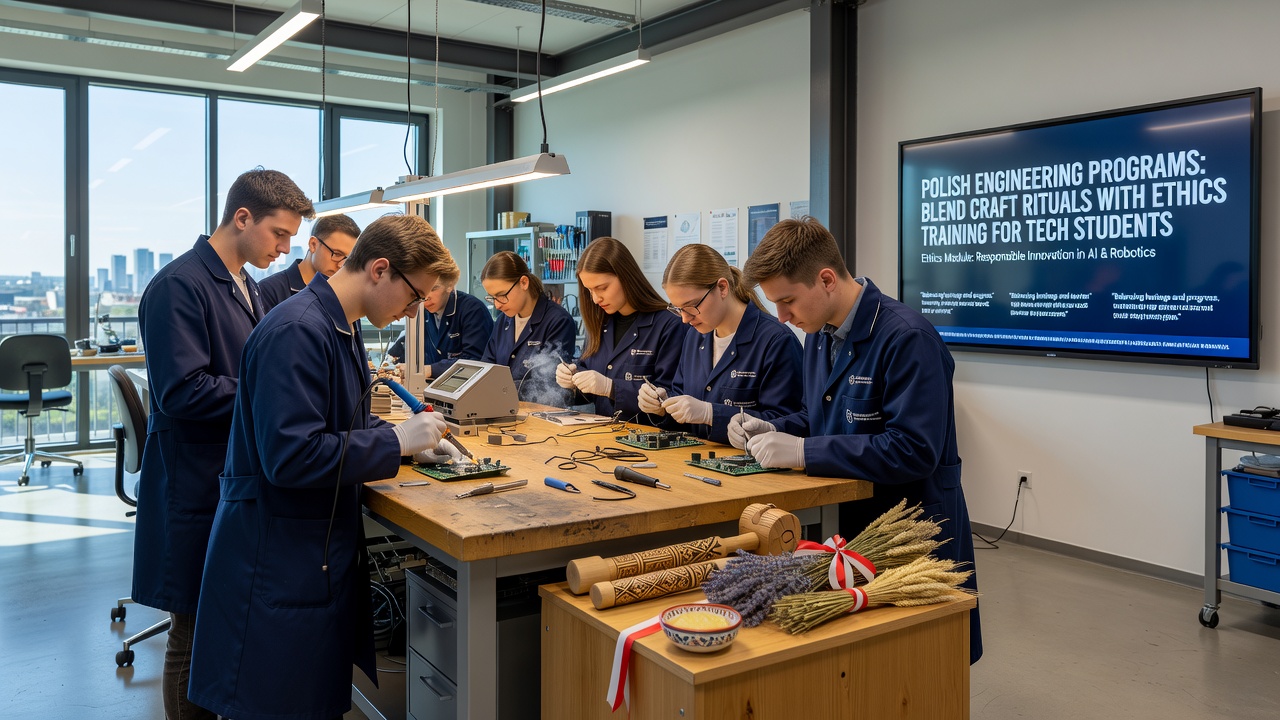
Program logs reveal that instructors maintain detailed rubrics linking specific craft steps to ethics learning outcomes. For instance, the precision required in chisel alignment during wood-pattern exercises corresponds to evaluation criteria on precision in technical documentation. Cross-institutional comparisons published in 2024 by the European Higher Education Area indicate that Polish programs allocate similar time blocks to these activities as select Nordic engineering departments do to reflective journaling modules, though the Polish variants emphasize physical repetition over written reflection. Enrollment figures for the 2025-2026 academic year project continued growth, with October 2026 marking the introduction of digital tracking tools that log participation across five additional universities.
Observed Outcomes and Supporting Data
Quantitative assessments collected through university registries show measurable shifts in student performance on standardized ethics assessments following completion of the craft-integrated modules. Pre- and post-course testing at Jagiellonian University documented average score increases of 12 points on a 100-point scale in sections covering professional conduct codes. Independent audits commissioned by the Conference of Rectors of Academic Schools in Poland confirm that these gains appear across demographic groups, including both domestic and international cohorts. Longitudinal tracking initiated in 2022 continues to collect employment placement data for graduates, with preliminary figures expected for release after the October 2026 cohort completes its final evaluations.
Case records from partner industry sites list instances where alumni applied pattern-recognition skills developed during ritual sessions to quality-control processes in manufacturing environments. The Technical University of Lodz maintains an internal database that cross-references course participation with internship performance reviews, revealing correlations in categories such as adherence to safety checklists. National statistics released by Statistics Poland include engineering program completion rates that have remained stable while the ethics components expanded, suggesting no measurable displacement of core technical instruction hours.
Conclusion
Polish engineering programs continue to document the integration of craft rituals within ethics training through standardized reporting mechanisms and multi-year studies. October 2026 represents a scheduled expansion point for these methods across additional faculties, supported by existing data from national and European oversight bodies. The approach maintains consistent structure across institutions while aligning with broader accreditation requirements for technology education.