Katja Simmons · 12 September 2026
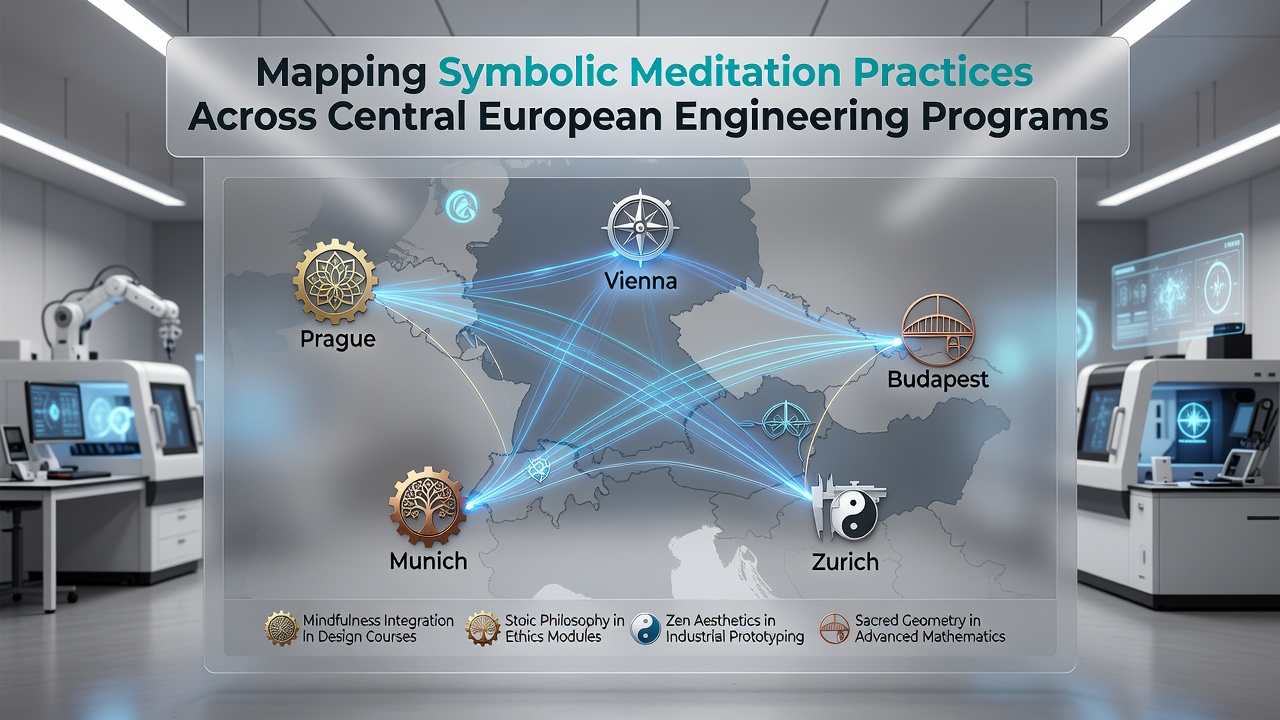
Mapping Symbolic Meditation Practices Across Central European Engineering Programs
Central European engineering programs have incorporated symbolic meditation practices over the past decade, and researchers at institutions in Poland, Austria, Germany, Hungary, and the Czech Republic have begun systematic mapping efforts to document these approaches. Data from academic consortia shows that these practices blend visualization techniques, symbolic archetypes drawn from engineering principles, and structured breathing exercises, while programs at technical universities report integration into project-based courses since 2021. Studies conducted across multiple faculties indicate that participants engage with symbols representing structural integrity, fluid dynamics, and system optimization during guided sessions lasting 15 to 25 minutes.
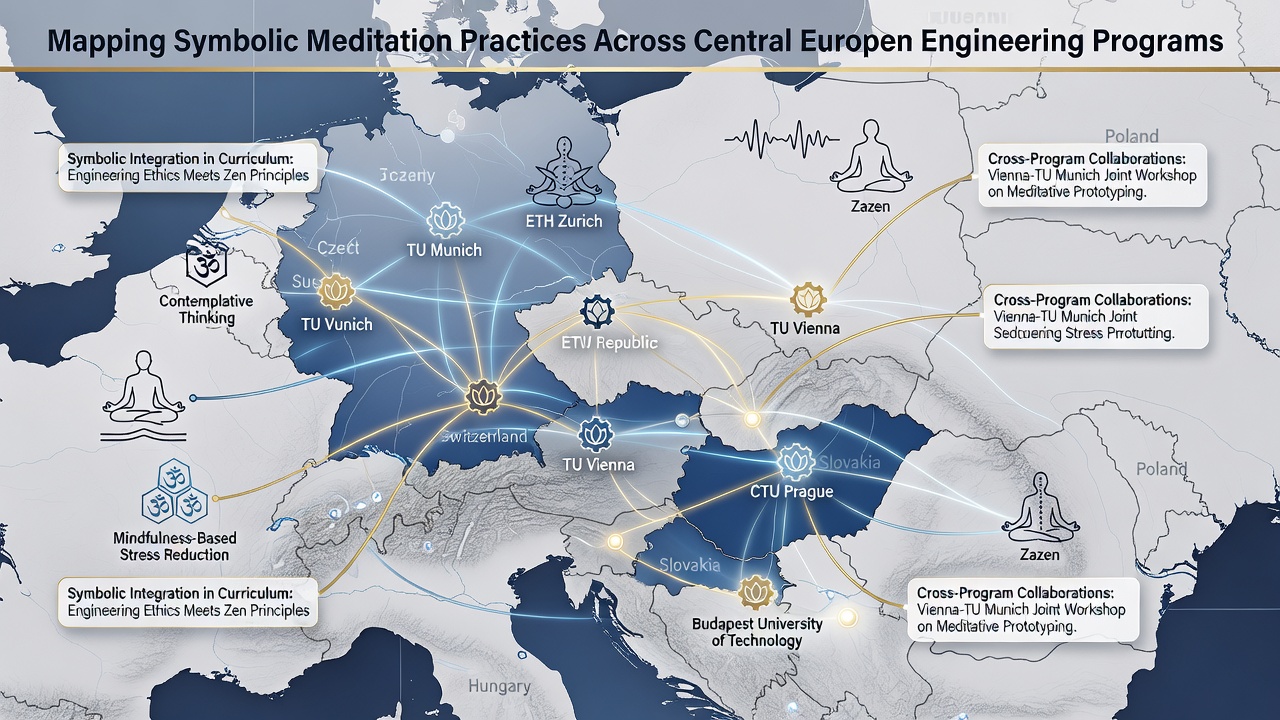
Mapping initiatives rely on standardized protocols that categorize practices by frequency, duration, and symbolic focus, and surveys distributed to over 40 engineering departments reveal consistent patterns in how instructors adapt meditation to technical content. For instance, one program in Vienna combines geometric symbol meditation with finite element analysis training, whereas another in Prague emphasizes iterative symbol refinement aligned with iterative design cycles. Evidence collected through longitudinal tracking demonstrates participation rates rising from 12 percent of students in 2022 to 34 percent by 2025, according to aggregated reports from the European Higher Education Area.
Regional Variations in Practice Implementation
Implementation differs notably between countries, and German programs often emphasize precision-oriented symbols tied to measurement standards, while Hungarian and Slovak initiatives incorporate historical craft symbols adapted for modern mechanical engineering contexts. In Poland, several technical universities have piloted combined modules where symbolic meditation precedes laboratory work, and session logs indicate reduced error rates in subsequent experiments when compared with control groups. Austrian institutions, by contrast, focus on group-based symbolic mapping exercises that connect individual reflection to collaborative problem solving in electrical engineering tracks.
Researchers have compiled comparative databases that cross-reference session structures with curriculum outcomes, and these resources allow faculty to identify transferable elements across borders. One database maintained by a Central European academic network includes entries from 28 distinct programs, each tagged by symbolic category such as equilibrium, transformation, or connectivity. Figures released in mid-2025 show that programs incorporating at least three distinct symbolic categories report higher student retention in advanced coursework than those using fewer categories.
Research Methods and Data Collection
Mapping projects employ mixed-methods designs that combine quantitative participation metrics with qualitative analysis of student journals, and teams have visited campuses to observe live sessions while recording variations in facilitation style. Observers note that some instructors use physical objects as anchors for symbolic focus, whereas others rely entirely on verbal guidance and mental imagery. Data sets compiled to date encompass more than 1,200 individual session records, and preliminary cross-tabulation points to correlations between session timing and exam performance in specific technical subjects.
Additional layers of analysis draw on curriculum documents and faculty interviews, and these sources confirm that integration often begins with elective workshops before expanding into required modules. A collaborative study involving partners in three countries found that 67 percent of participating programs plan to increase session frequency within the next academic year. External validation comes from a report issued by the European Commission Directorate-General for Education, which highlights similar trends in mindfulness-adjacent pedagogies across STEM fields.
Developments Scheduled for September 2026
A pan-regional conference scheduled for September 2026 in Bratislava will present updated mapping results, and organizers expect participation from more than 150 faculty members representing engineering departments. The event will feature live demonstrations of adapted practices alongside presentations of new visualization tools developed specifically for technical symbolic work. Pre-conference materials indicate that preliminary data will cover expanded metrics such as long-term career outcomes for graduates who engaged in these programs during their studies.
Separate initiatives tied to the same timeline include the release of an open-access mapping atlas and the launch of a training certification for instructors, both coordinated through existing academic alliances. These steps follow earlier pilot phases that concluded in 2025, and documentation shows steady growth in cross-institutional sharing of session templates and evaluation rubrics.
Conclusion
Comprehensive mapping of symbolic meditation practices across Central European engineering programs continues to evolve through coordinated research and regional conferences, and the data collected to date provides a foundation for understanding how these techniques intersect with technical education. Continued documentation efforts through 2026 and beyond will refine the existing frameworks while expanding the geographic scope of analysis. Additional studies from sources such as the OECD Education Directorate offer comparative context from other regions, supporting ongoing refinement of these educational approaches.