Otto Coleman · 26 September 2026
Eastern Symbolic Traditions Find New Ground in Warsaw's Engineering Ethics Courses
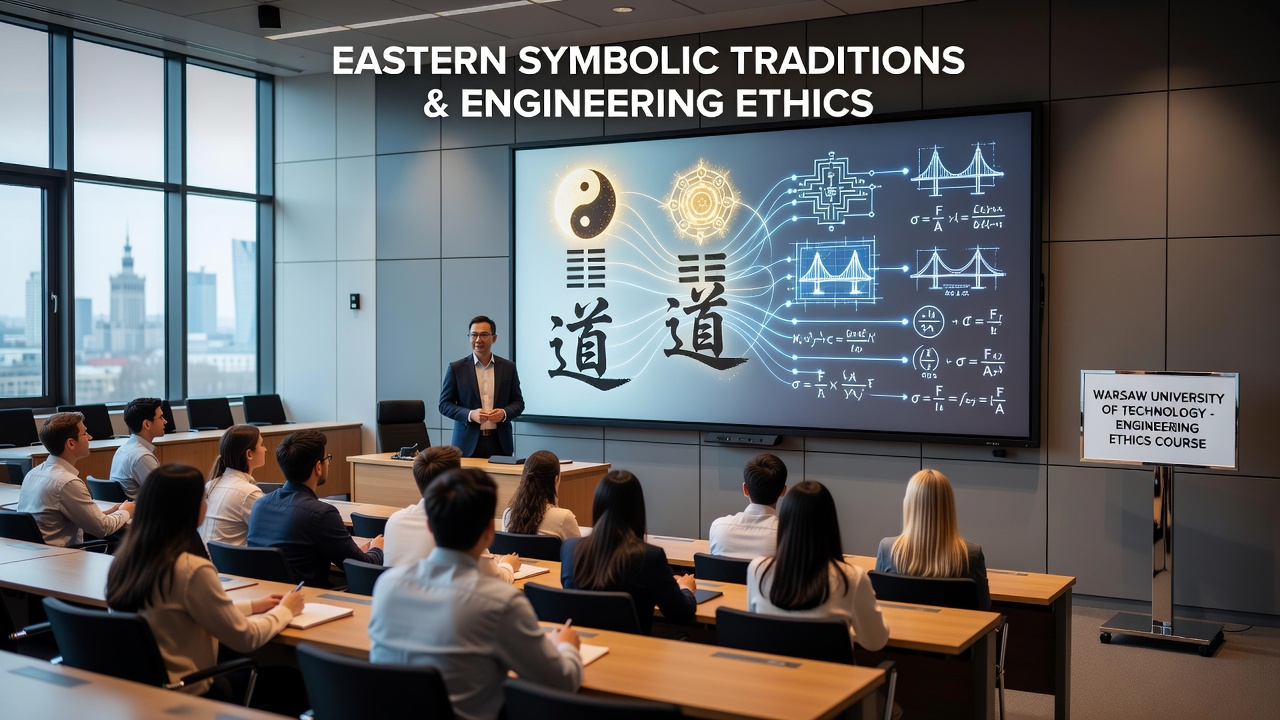
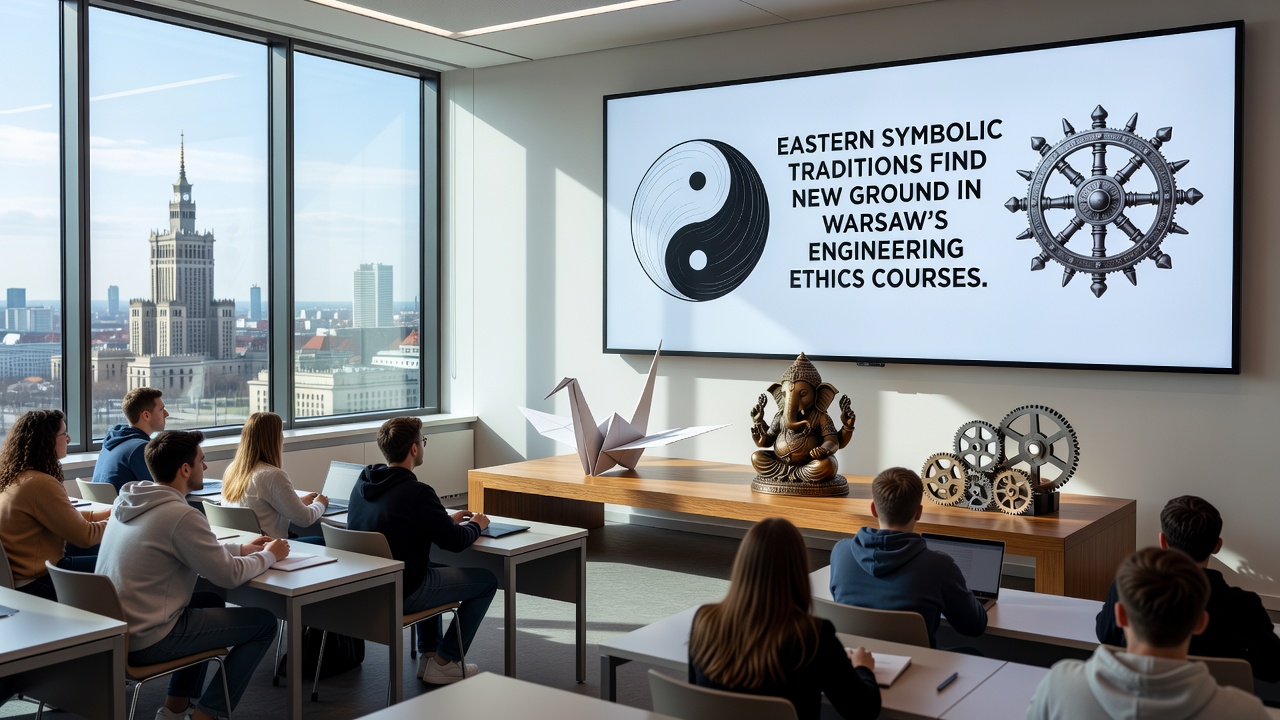
Warsaw's engineering programs have integrated select Eastern symbolic traditions into ethics curricula over the past decade, and observers note this approach draws on elements from Buddhist, Taoist, and Hindu visual systems to frame decision-making scenarios for students. Faculty at institutions such as Warsaw University of Technology report that symbols like teh yin-yang diagram and the Dharma wheel appear in case studies that address technology deployment, resource allocation, and professional responsibility.
Programs began incorporating these materials after 2018 curriculum reviews showed gaps in cross-cultural reasoning exercises, and data collected through student assessments indicate measurable shifts in how participants analyze dilemmas involving artificial intelligence oversight and infrastructure projects. Researchers from the Polish Ministry of Education and Science documented participation rates across multiple departments, while a 2024 report from the European University Association highlighted similar pilots in neighboring countries.
Core Symbols and Their Classroom Applications
Instructors present the I Ching hexagrams alongside standard engineering ethics frameworks when students evaluate risk assessment protocols for urban development projects, and this pairing encourages mapping of change patterns onto technical variables. The lotus motif surfaces in modules on sustainable design, where its growth-through-mud imagery aligns with discussions of circular economy principles in materials science courses. Faculty compile these examples into shared digital repositories that other Central European programs access, creating a network of adapted teaching resources.
One documented module uses mandala structures to organize stakeholder mapping exercises, allowing students to place regulatory bodies, local communities, and corporate entities in concentric layers that mirror traditional symbolic layouts. Assessment records from 2023 through 2025 show consistent use across four Warsaw institutions, with session logs indicating roughly 1,200 engineering students encountered at least one such exercise each semester.
Program Expansion Timeline and 2026 Developments
Initial pilots launched in 2021 within the Faculty of Electronics and Information Technology, then expanded to mechanical and civil engineering tracks by 2023. University records indicate that September 2026 marks the rollout of a revised ethics core requirement that mandates two dedicated sessions on symbolic reasoning methods for all incoming master's candidates. Planning documents list guest lectures from scholars affiliated with Kyoto University and the University of Delhi, scheduled to coincide with the new term start.
Coordination with the Polish Accreditation Committee ensured alignment with national learning outcomes for professional ethics, and joint working groups reviewed sample materials against existing EU directives on higher education intercultural competence. Figures released by the committee in early 2025 project a 30 percent increase in courses featuring non-Western symbolic content by the close of 2027.
Research Findings and Cross-Institutional Data
Studies conducted by teams at Warsaw University of Technology tracked pre- and post-course performance on standardized ethics inventories, revealing that groups exposed to symbolic frameworks scored higher on items measuring perspective-taking across cultural contexts. A parallel project at Gdańsk University of Technology, referenced in a 2025 inter-university report, replicated portions of the Warsaw protocol and produced comparable patterns in student reasoning logs. These datasets remain available through institutional repositories for further meta-analysis.
External evaluations from the Organisation for Economic Co-operation and Development's education directorate noted the Warsaw model in a comparative review of European STEM ethics training, while a Canadian research brief from the University of Toronto's engineering education lab cited the same programs when discussing visual literacy strategies. Both sources emphasize measurable integration rather than replacement of established Western philosophical texts.
Faculty Training and Resource Development
Workshops organized through the Warsaw University of Technology Centre for Didactic Innovation train instructors on accurate representation of symbolic traditions, and attendance logs show over 85 faculty members completed the sessions between 2022 and 2025. Resource kits include annotated diagrams, historical context notes, and sample discussion prompts that avoid religious endorsement while preserving interpretive depth. Partner libraries maintain physical collections of primary texts on East Asian iconography for cross-reference.
Digital platforms hosted by the university now feature interactive versions of these symbols that students manipulate during remote ethics simulations, and usage analytics indicate steady engagement during examination periods. The approach continues to draw on archival materials from Polish sinology departments established in the mid-20th century, linking contemporary engineering pedagogy to longer academic traditions of Eastern studies within the country.
Conclusion
Integration of Eastern symbolic traditions into Warsaw engineering ethics instruction follows documented patterns of curriculum adaptation that began in 2018 and continue through planned 2026 updates. Available data from participating universities and external reviews provide records of implementation scale, student exposure, and cross-institutional sharing. These elements together outline a sustained academic development rather than an isolated initiative.